

About TDIF
We started TDIF because the connection between small business innovation and government adoption was ineffective.
Good technology kept stalling somewhere between a working prototype and a program that could field it. We thought the connective tissue could be built deliberately — so we started building it.

The origin story
Beer, robots, and a better way.
The Texas Defense Innovation Forum began in 2018, at the Capital Factory in Austin, when the city was becoming the center of gravity for defense and dual-use innovation. What started as a meetup — speakers, tech topics, and barbecue — grew into the Defense Academy and, eventually, the research institution we run today.
Along the way we kept noticing the same problem: traditional research institutions were struggling to understand the needs of a small business. We knew we could do better, so in 2024 we started offering a research-institution partnership built around the small business's success — zero IP grab, a named research lead on every project, and a partner who moves at the pace a submission deadline actually demands.
Leadership
Built by defense-R&D operators.
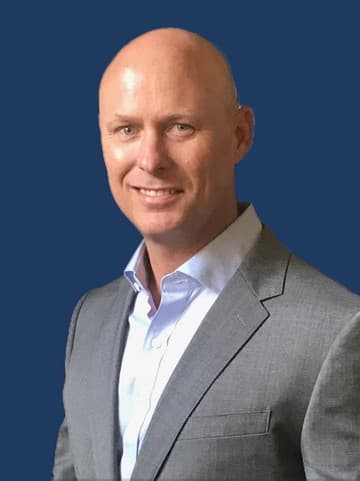
Co-Founder & President
A plankholder of the national-security innovation ecosystem in Austin — he builds the institutions that connect industrial-era problems to emerging technology, and built TDIF because the research-institution side of that was broken.
- Founded the connective tissue, twice
- Designed and stood up both the Center for Defense Innovation at Capital Factory and the Texas Defense Innovation Forum — programs built to connect people, companies, and the government problems that need them. His Materiel Innovation Pipeline work maps how defense technology actually moves from the lab to the field.
- Fifteen years of law practice, run as strategy
- Directed strategy, policy, and operations for a large nationwide legal organization, building small cross-functional teams to solve complex problems in dynamic environments. Extensive experience in risk management, compliance, investigations, litigation, and sensitive national-security matters.
- Finds the route, then walks it with you
- The through-line across the Army, the law, and the ecosystem work: help an organization see where it needs to go, plan the most direct, resource-efficient, and legal route there, and lead it along the path.
- Teaches the next set of founders
- Teaches Hacking for Defense at the University of Texas — the course that puts student teams against real national-security problems.
- Credentials
- Former cavalry officer and Army attorney. West Point, 1998. The University of Texas School of Law, 2005. Currently General Counsel and Chief Strategy Officer at Bravo Ordinance.
“Twenty thousand solution providers are better than twenty.”
By the numbers
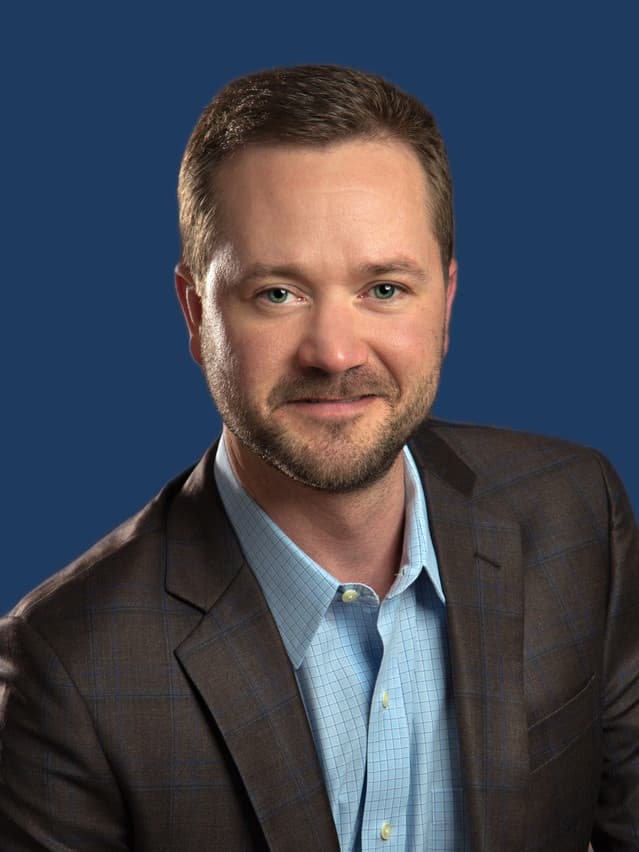
Co-Founder, VP of R&D, Principal Investigator
The research lead behind TDIF's technical work. Twenty years as principal investigator on other people's hardest technical problems — which is why a small business that teams with TDIF gets real engineering, not a research institution that signs the teaming agreement and disappears.
- Principal investigator on 40+ programs, across a dozen agencies
- PI and program manager across DARPA, the Air Force, Navy, Army (ARO, DEVCOM, Army Futures Command), USSOCOM, the Defense Health Agency, NIH, and NOAA. $21M+ in SBIR/STTR research led, carried through to Phase III with Bennett Aerospace, BioMojo, and Applied Research Associates — Phase III is the stage most SBIR work never reaches, where the technology moves to a real customer.
- The range STTR topics actually ask for
- Current focus areas include AI and computer vision for counter-UAS, developed with the University of Colorado Boulder; autonomous robotics for dismounted-warfighter defense; and tag-track-locate technology for personnel tracking and search and rescue. With TDIF as the research institution, recent Air Force STTRs have delivered contested- and denied-environment RF communications, radiation-hardened space edge computing with on-orbit AI/ML, and immersive 3D training environments built with neural radiance fields and large language models. Beneath that sits two decades of range: directed energy and free-space optical communications for DARPA and the Navy, augmented- and mixed-reality medical simulation demonstrated with military medical teams at USUHS, and chemical and biological sensing, advanced materials, and additive manufacturing. When an STTR topic lands in an unfamiliar corner, the odds are he has worked the problem next door.
- The beam-steering patent Meta licensed
- His research career began in 2005 in photonics at NC State, where he is a named inventor on a U.S. patent for liquid-crystal beam steering, since licensed by ImagineOptix and Meta. It is university research that became commercial hardware — the exact path STTR exists to create.
- Credentials
- PhD and MS in Electrical Engineering (photonics and biomedical focus), NC State University. BS in Computer Engineering, University of Pittsburgh. Co-founder of two small defense businesses, two defense-focused nonprofits, and two conservation-focused nonprofits.
“The research institution should make the company stronger, not take a cut and disappear.”
By the numbers

Board Member, Treasurer & Director of Acceleration Programs, PI
He walks into unsolved problems and ships hardware against them — often while the requirements are still moving underneath him.
- First-of-kind aerospace and defense hardware
- Engineered cargo structures against SpaceX's evolving Starship requirements while the Air Force's Rocket Cargo concept was still being defined. Designed the Black Knight loader, Knight Aerospace's first electromechanical cargo loader, built for Agile Combat Employment. Led the team that designed and built a self-contained aeromedical evacuation module under a Phase II SBIR with the Texas Military Department.
- Turned a stalled team into a funding engine
- Inherited six engineers doing legacy pallet work with no innovation pipeline and no government funding strategy. Taught himself the Air Force SBIR system from the ground up, ran the full lifecycle from topic identification through customer transition, and secured $10M+ in Air Force SBIR funding — doubling the team to twelve in 24 months.
- FDA-regulated products at Fortune 500 scale
- Led development of the Prevena RESTOR Arthroform and 35cm surgical dressing platforms at 3M/KCI, and delivered orthopedic implant systems including the SpeedTitan compression implant at Johnson & Johnson / DePuy Synthes — owning verification and validation, risk analysis, and 510(k) submission prep under full FDA design controls and ISO 13485.
- Materials and manufacturing foundation
- Improved aerospace composite manufacturing at Albany Engineered Composites through structured experimentation, tooling design, and Lean Six Sigma. Earlier, at Southwest Research Institute, worked on components for Alvin — the Navy-owned deep-sea research submersible.
- Credentials
- Licensed Professional Engineer (Texas). MS in Materials Science and BS in Mechanical Engineering, Texas A&M University. Co-founder of a non-destructive testing equipment company, concept through commercialization.
“Most contractors wait for a locked spec. The interesting work starts before there is one.”
By the numbers

Why government evaluators can trust us
TDIF is a qualified nonprofit Research Institution under SBA STTR rules, with principal investigators who hold active DoW program experience and a NIST SP 800-171 self-assessment posted to SPRS.

Tell us what you're submitting, and when.
We'll tell you quickly whether we're the right research institution for your topic — and if we are, we can have the teaming agreement signed fast, within hours when your deadline requires it.